Work / CARS24
 CARS24 · 2025 · Patterns, CMS, Adoption
Pages built from tested blocks, not from scratch
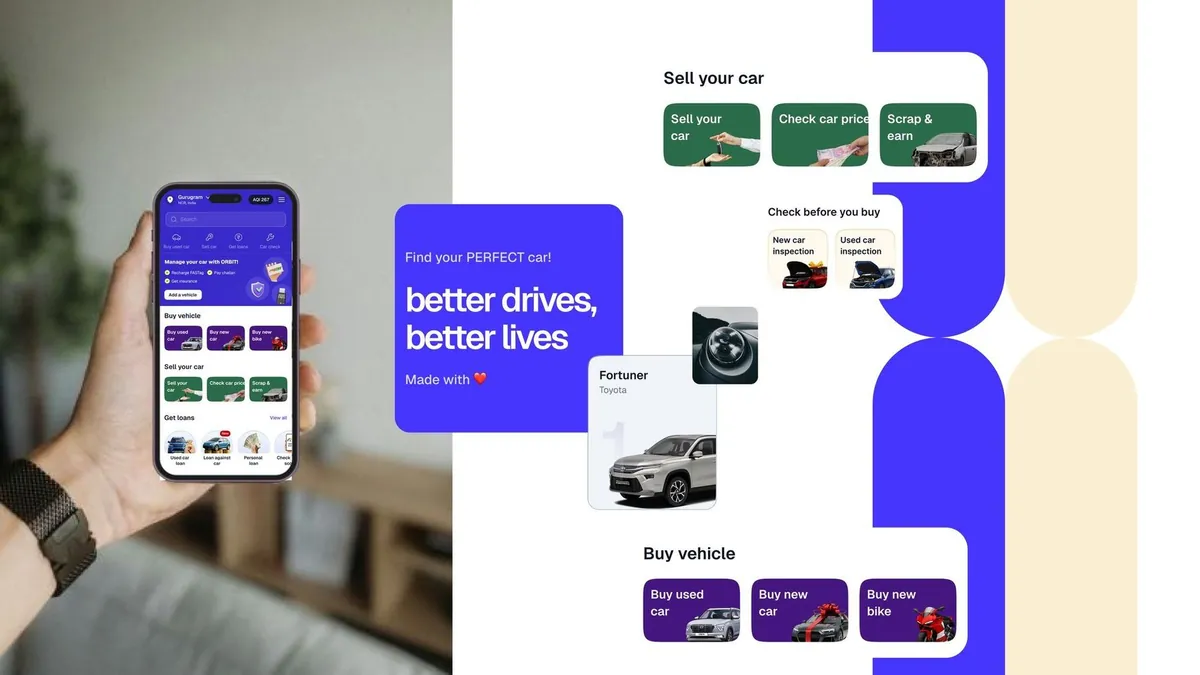
CARS24 was turning into a super app and launching new services almost every month. Every homepage and landing page was designed and built from zero. We built a pattern library that lets teams assemble pages from tested blocks, so they ship faster and every page feels like one product.
The 30-second version
The problem
Every new page started from a blank canvas. The same cards and carousels were built again and again, and no two services felt alike.
What we did
Six families of page blocks with grid, text, image and behaviour rules, wired to the CMS and the tokens, with one name from Figma to code.
What changed
Pages took about 43% less time. Within three months every major redesign in three countries was built on the library.
- ~43%
- less time to design and build a page
- 3 months
- to reach every major redesign
- ~$212k
- saved in design and development
- 3
- countries building from one library
A car company turning into a super app
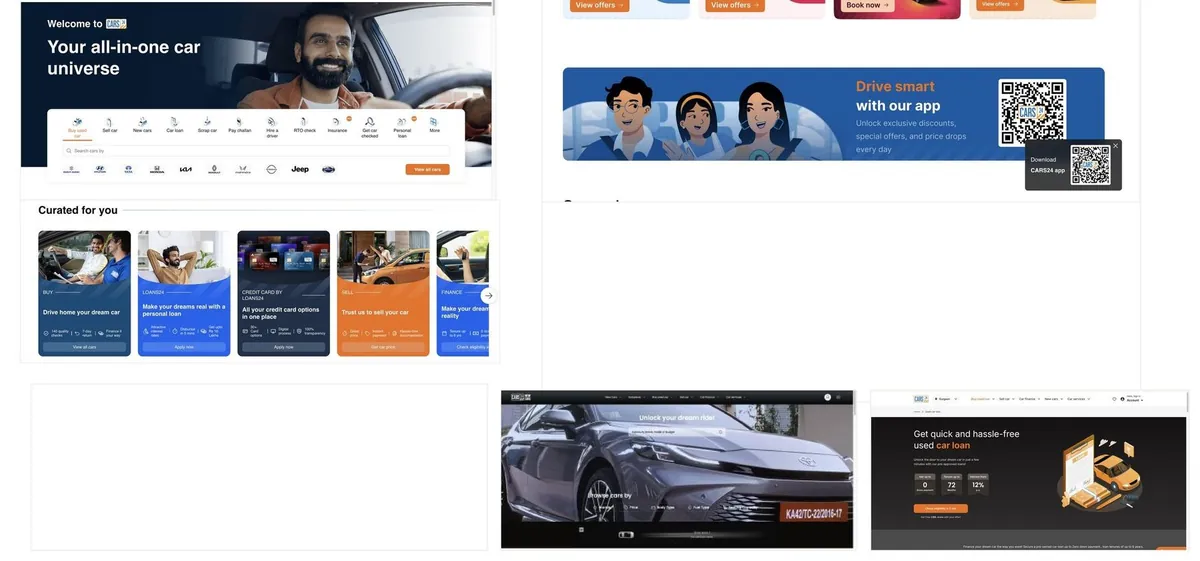
Loans, car checks, fines, FASTag, servicing, car wash: new services launched almost every month, each needing its own homepage, landing and offer pages.
- Buy a used car
- Sell your car
- Get a loan
- Car check
- New cars
- Insurance
- Pay challan
- Recharge FASTag
- Car servicing
- Car wash
- Scrap and earn
- Hire a driver
- Credit cards
- Showrooms
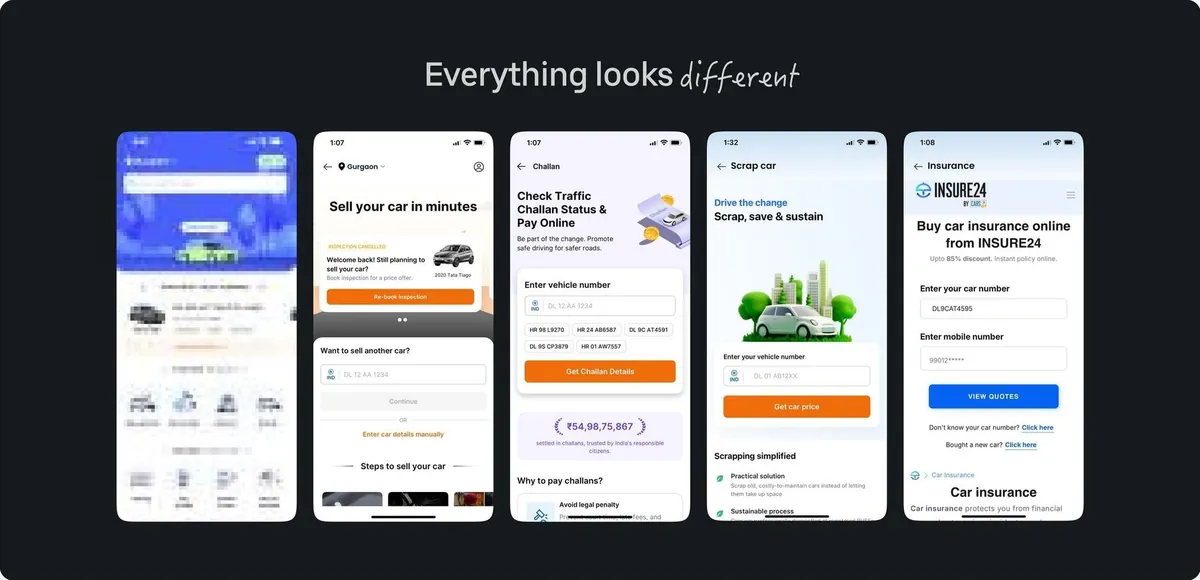
The back end kept up. The screens didn't: several redesigns ran at once, and the app started to feel like many apps stitched together.
Every page started from a blank canvas
Nothing was shared, so the same work was repeated, it cost more, took longer, and moving between services felt like changing apps.
Borrowing what people already know
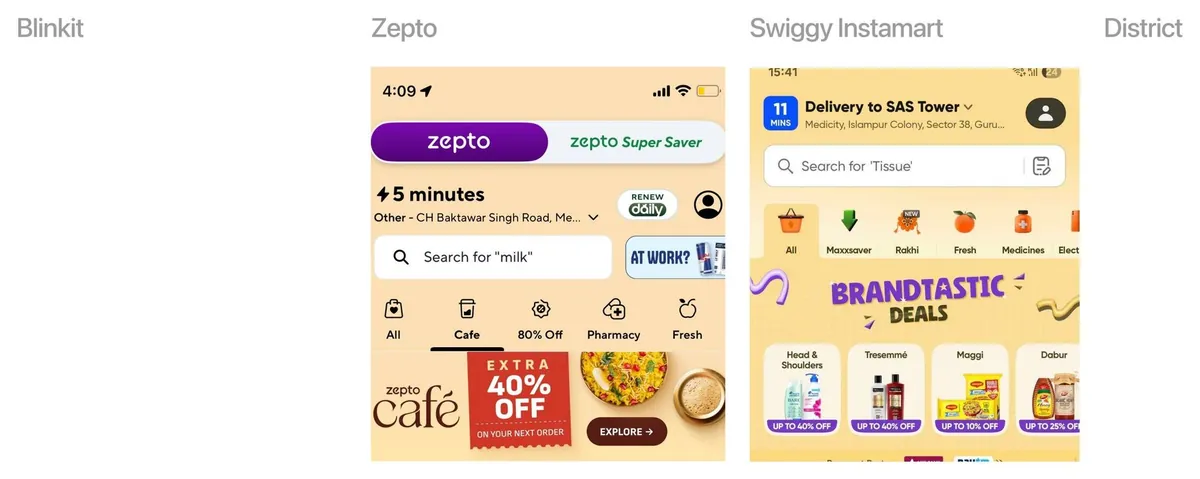
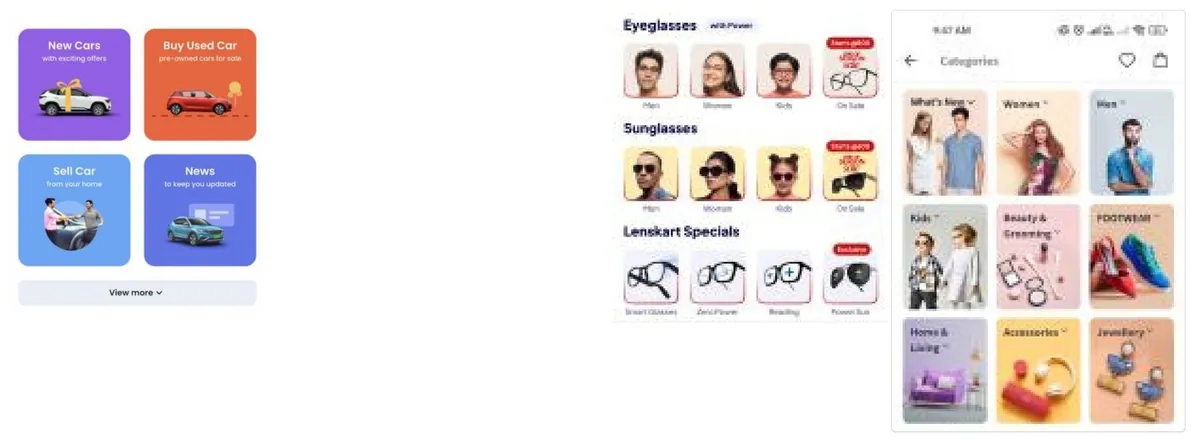
Our users also lived in Swiggy, Zepto and Blinkit. Service grids became quick-action rows, offer banners became the banner family, scrolling rails became sliders.
Read the detail
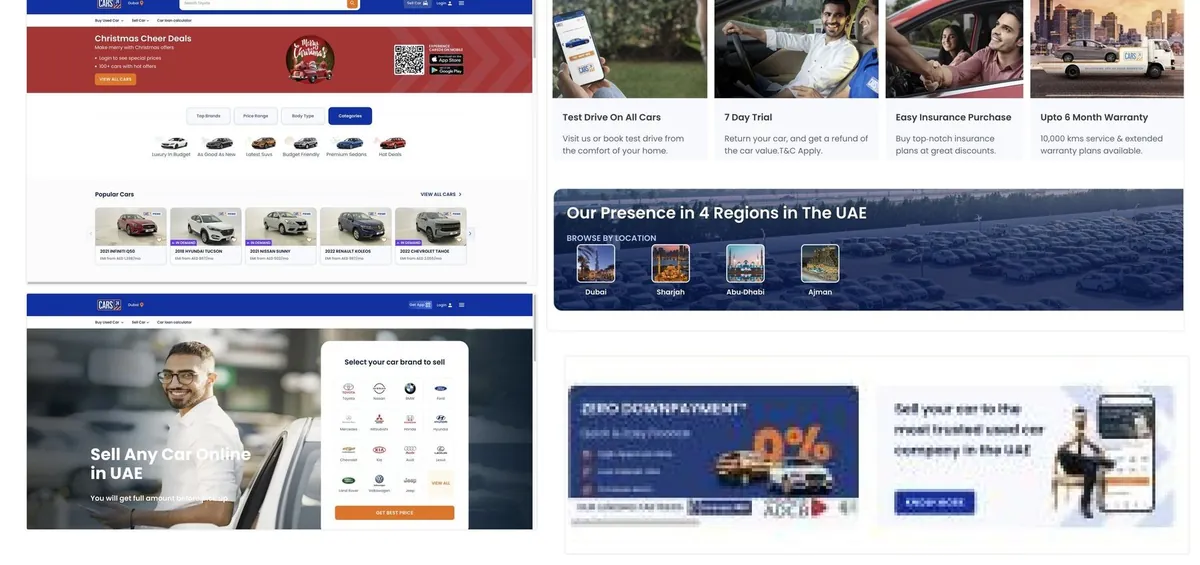
We audited homepages, landing pages and exit flows in every market and sat with product managers, engineers and visual designers. Layouts were all over the place, one component existed in many builds, there were no rules for content, and nobody knew how a section should adapt across screens.
Every pattern comes with its own rules
Grid, text limits, image shapes and behaviour, set in the CMS, so an editor can fill a pattern and still get a page that looks right. Try it: type a longer title, or change the image shape.
Homepage / Widgets / contextual_card_slider
Locked by the pattern: size, spacing, type, colours, behaviour. Editable: image, text, button, link, schedule.
Live preview
Like this car? Take it for a spin!
Book test driveOver the limit: this title would break the card. Shorten it.
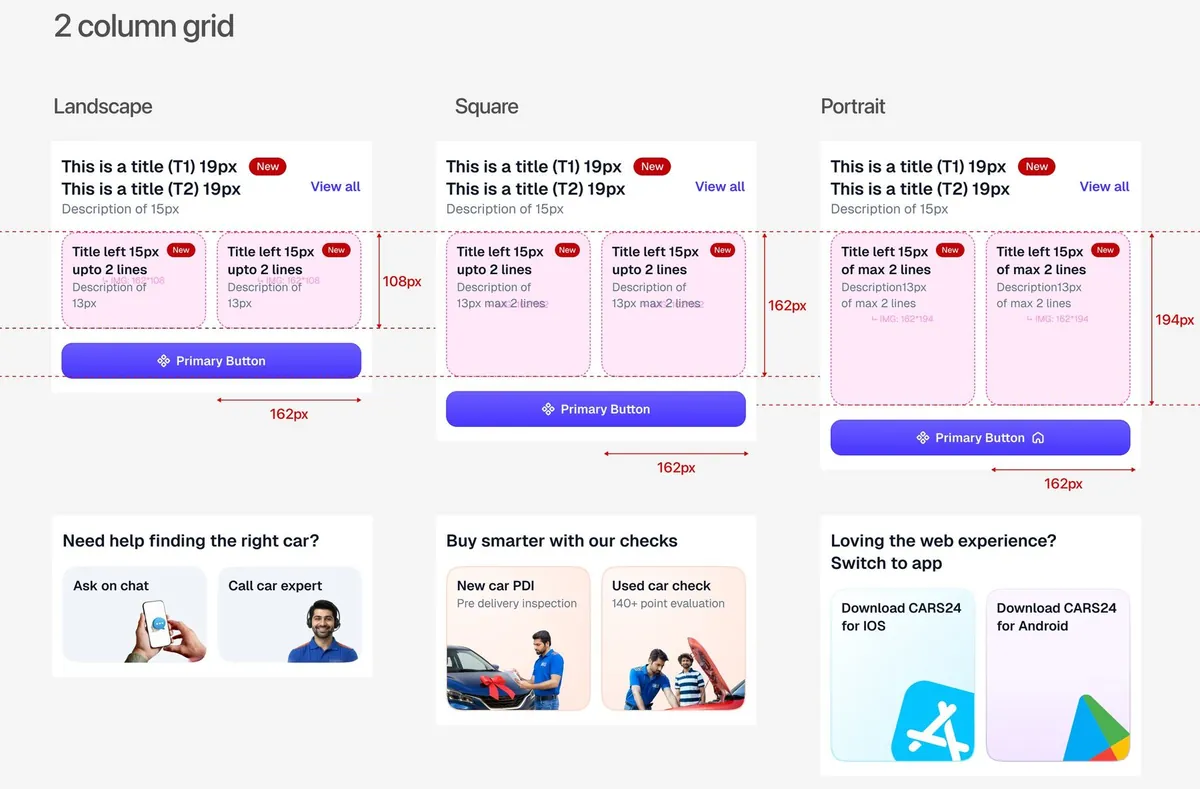
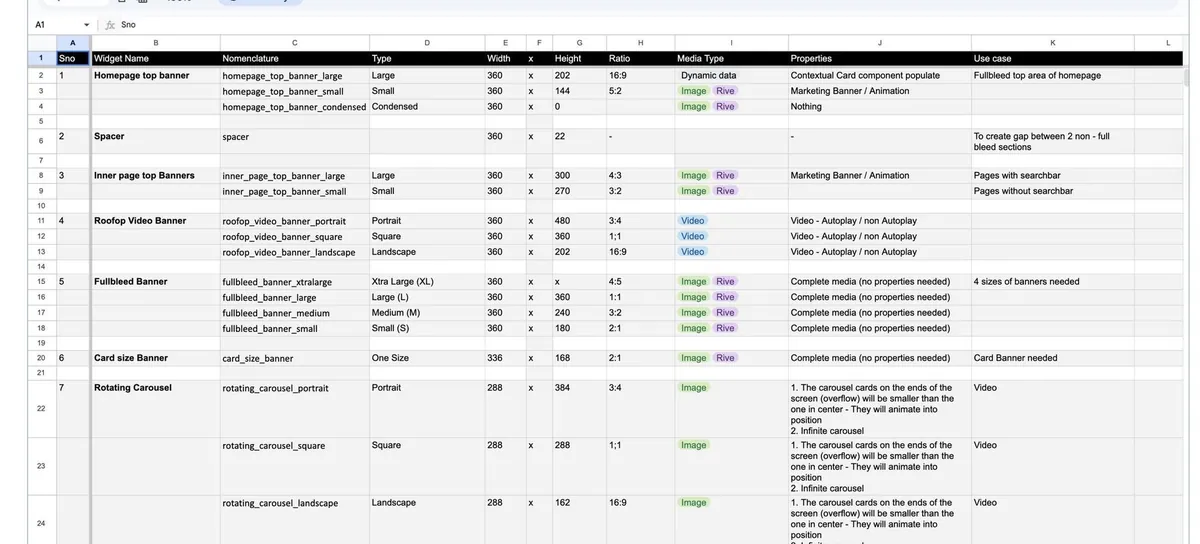
Six families of page blocks
Built on the base design system, with layout templates, ready-made combinations, tokens, specs and usage guidance.
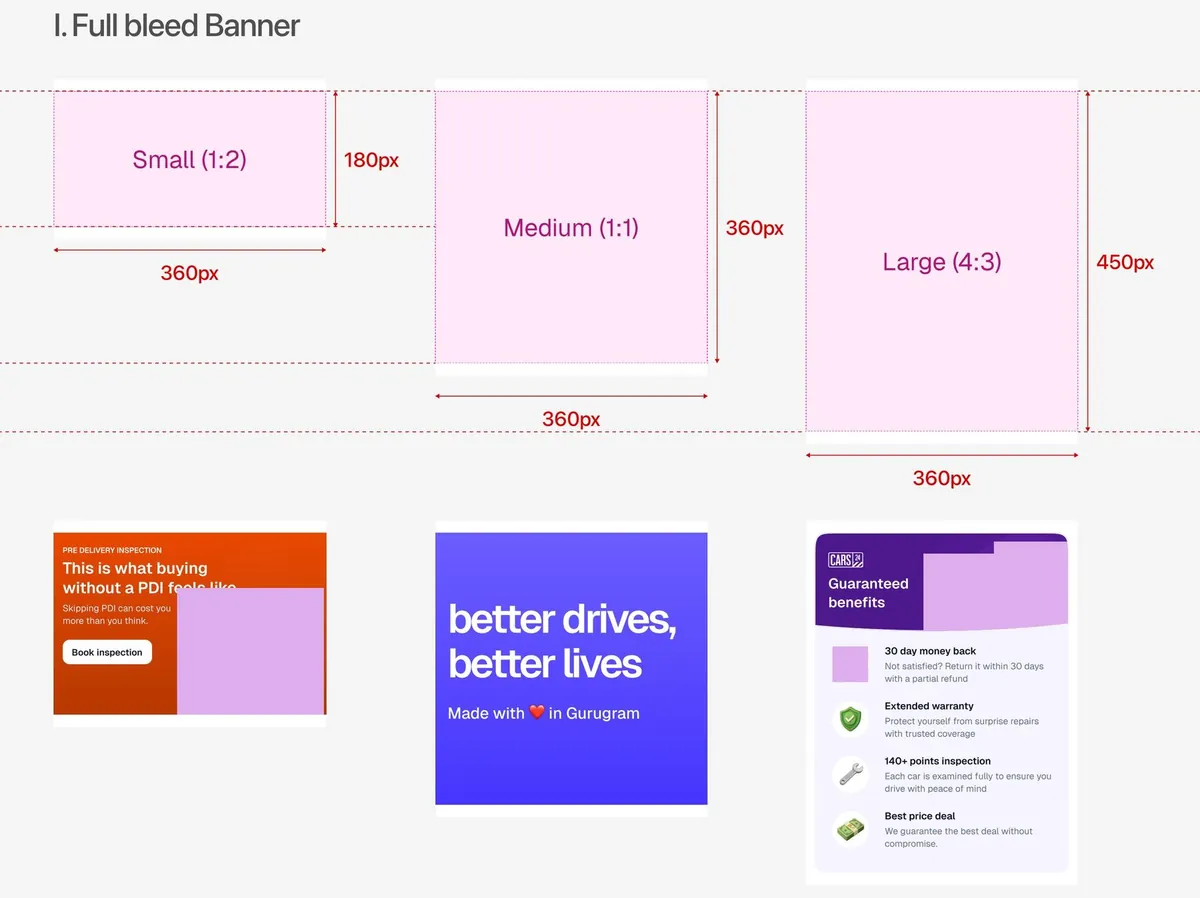
Banners
One template, three types: full bleed, padded and carousel, in fixed sizes. Used for campaigns, offers and the top of every homepage.
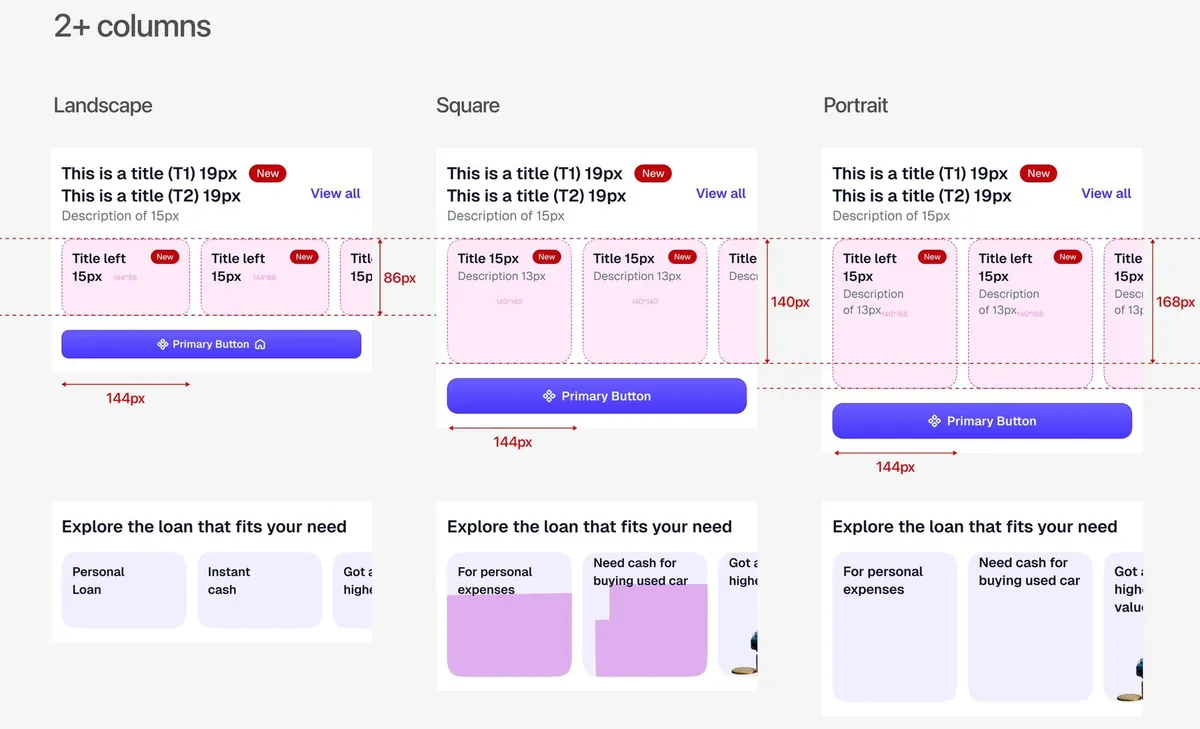
Grids
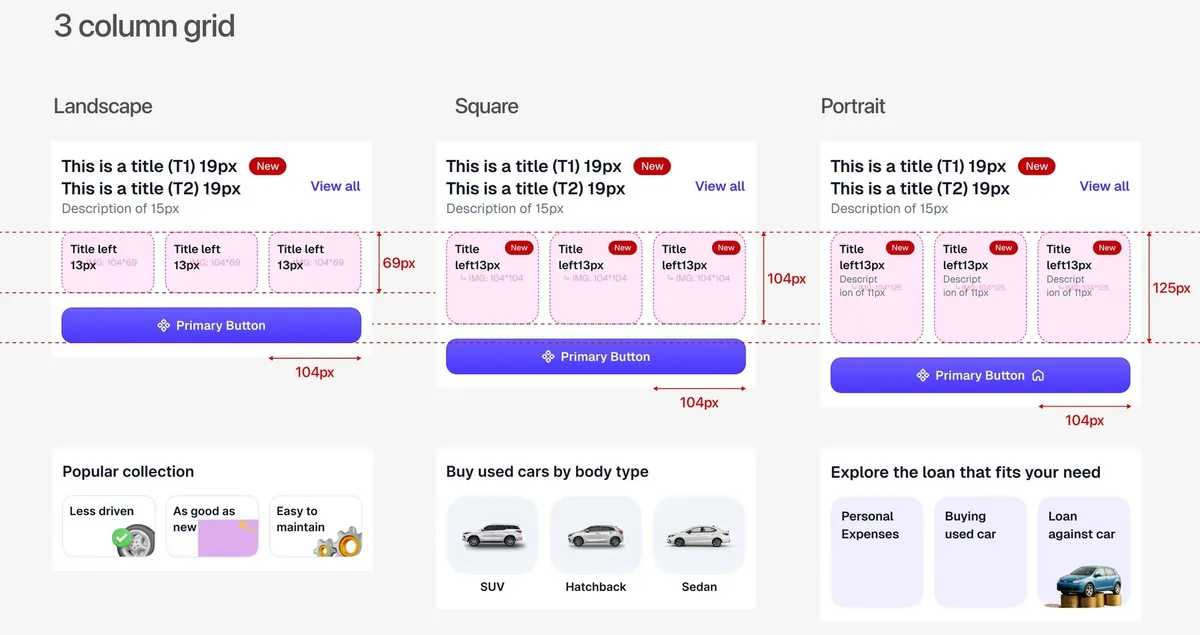
Two, three and four columns in landscape, square or portrait tiles, with one header and one button. Cars by body type, explore by brand.
Sliders
Rails that scroll sideways with one to four cards in view, always with the next card peeking in. Hot deals, trending new cars.
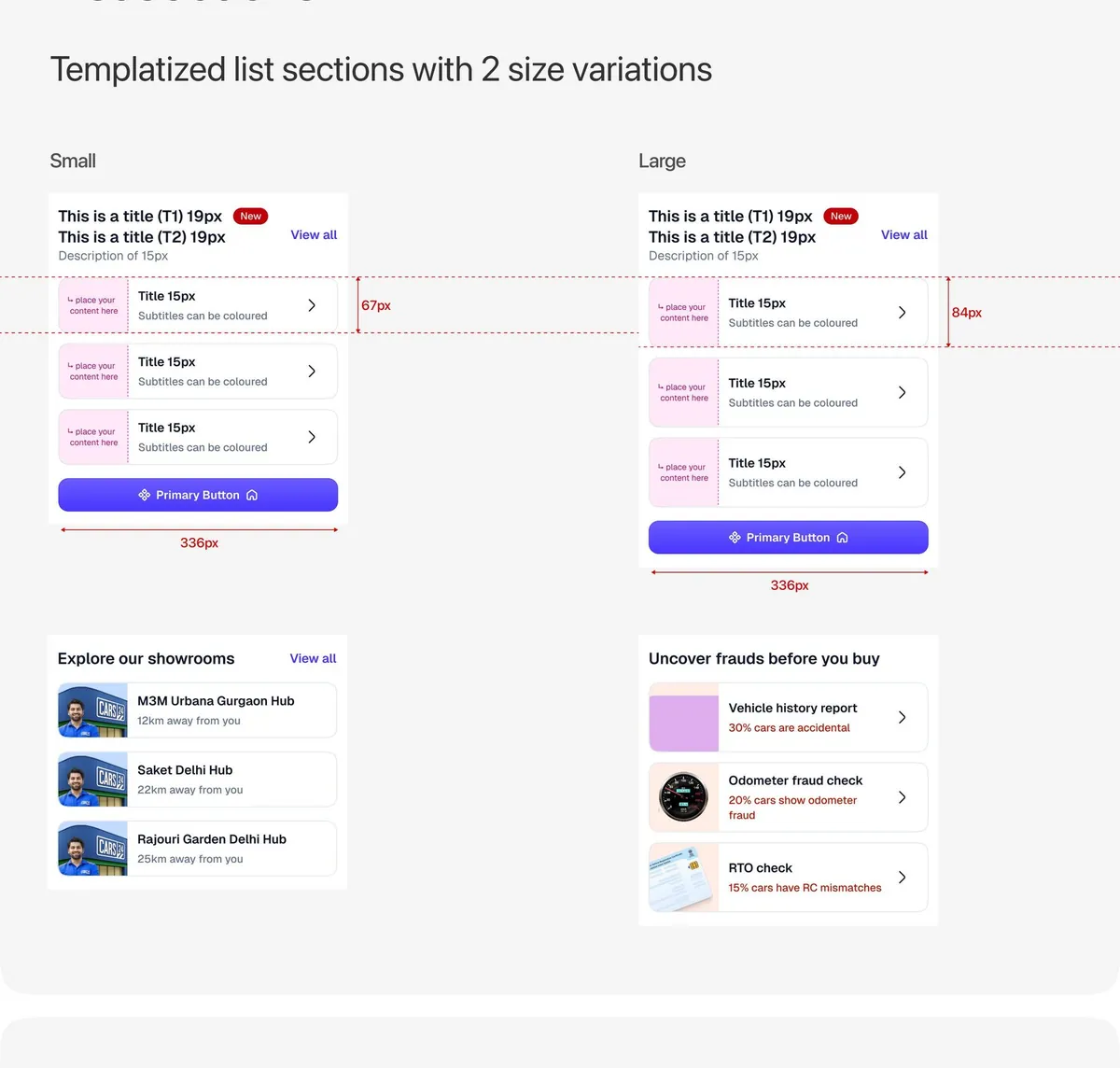
Lists
For content that needs more words than a tile: thumbnail, title, a line of text, a chevron. Showrooms, car checks.
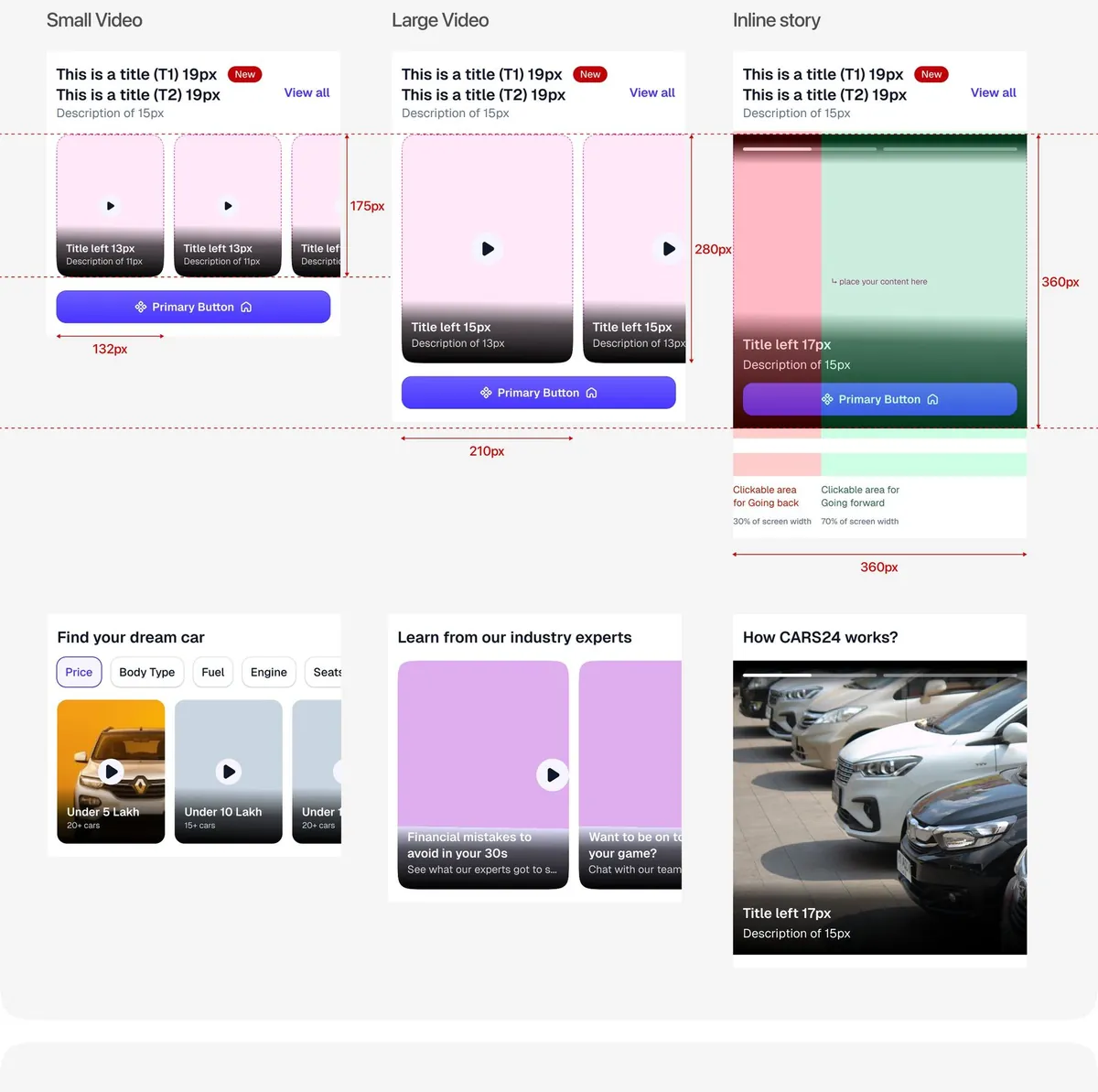
Stories and video
Story bubbles and video cards with autoplay set in the CMS. Customer stories, expert videos.
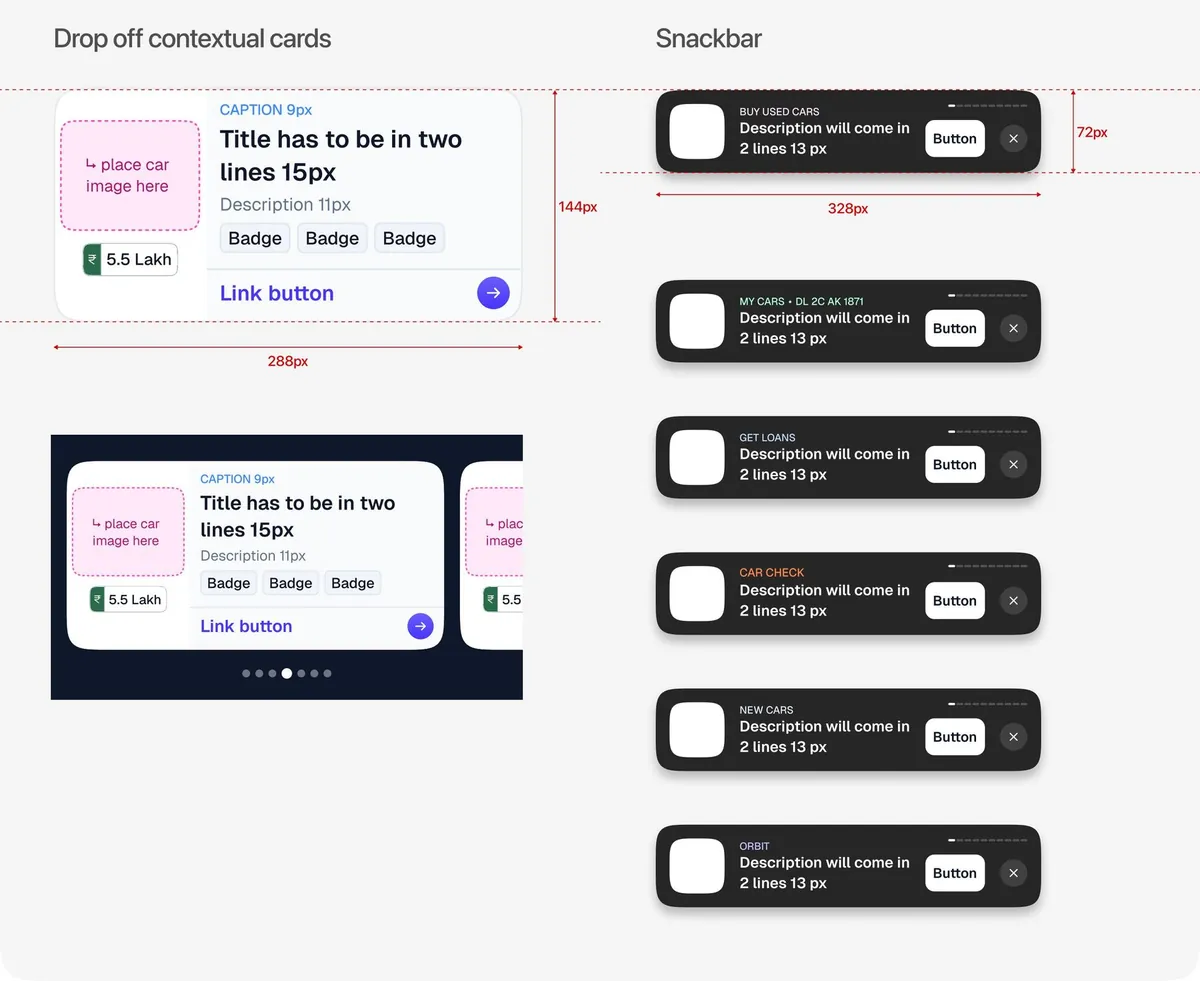
Snackbars and drop-off cards
Small nudges that bring people back to what they left: a car they viewed, a loan application they didn't finish.
One name from Figma to code to CMS
The library only works if four groups can use it without waiting on each other. Every pattern has one name everywhere.
contextual_card_sliderPicks patterns and sets the page order.
<ContextualCardSlider />Builds each pattern once, mapped to base tokens.
contextual_card_sliderFills images, copy and links, and schedules what goes live.
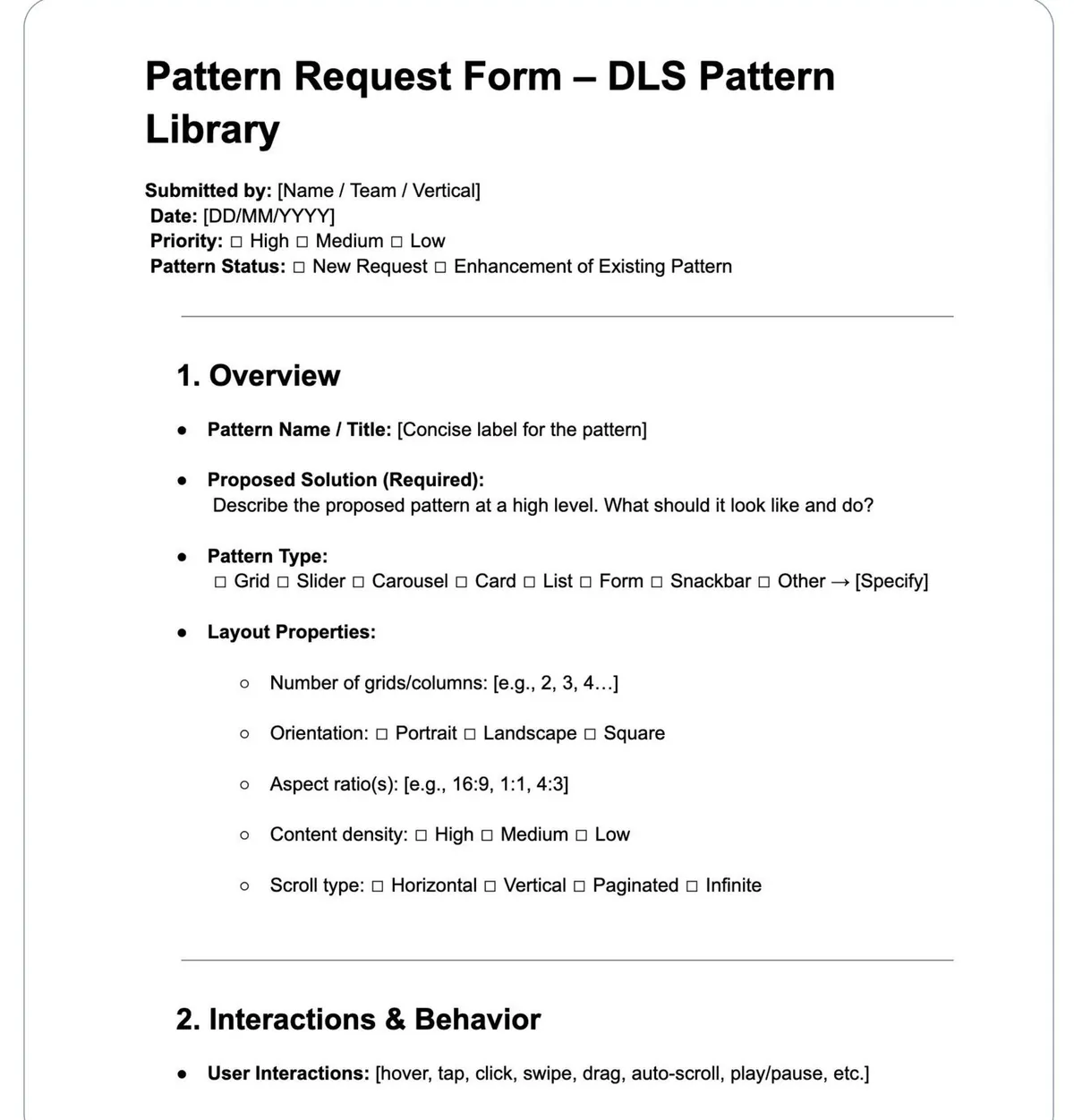
Pattern request · HighAsks for new patterns with the request template, not one-off screens.
From empty patterns to a live page
A page is now a stack of patterns. Drag the divider: on the left, the empty blocks with their rules; on the right, the same page filled in through the CMS. Scroll inside the frame.


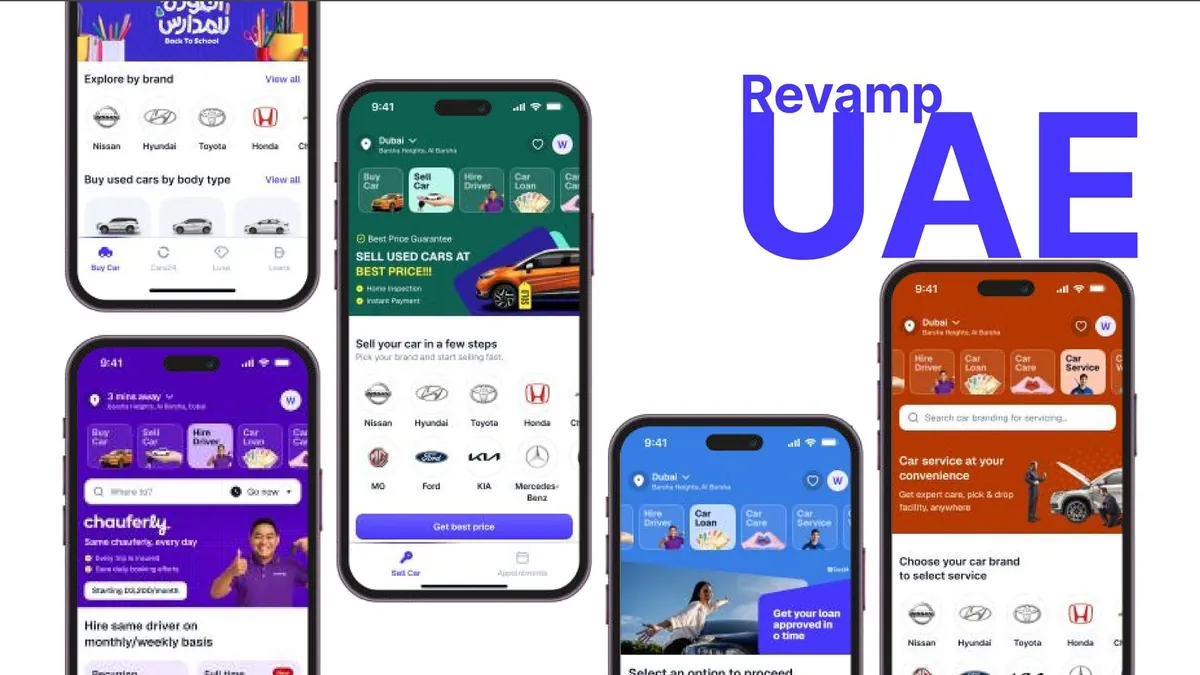
One library, every market and service
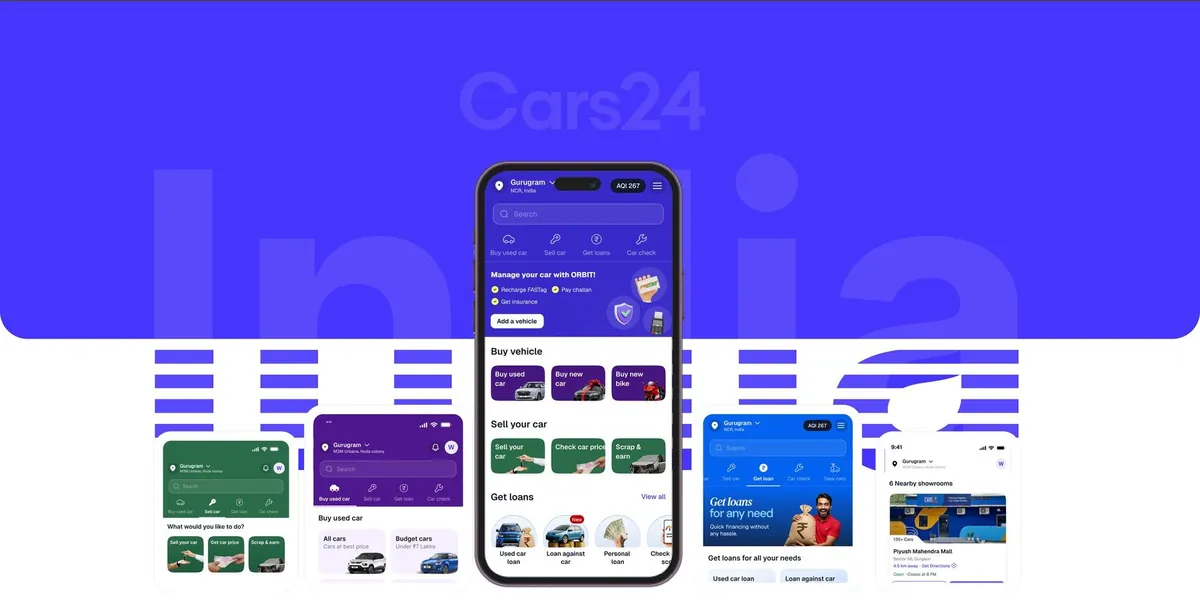
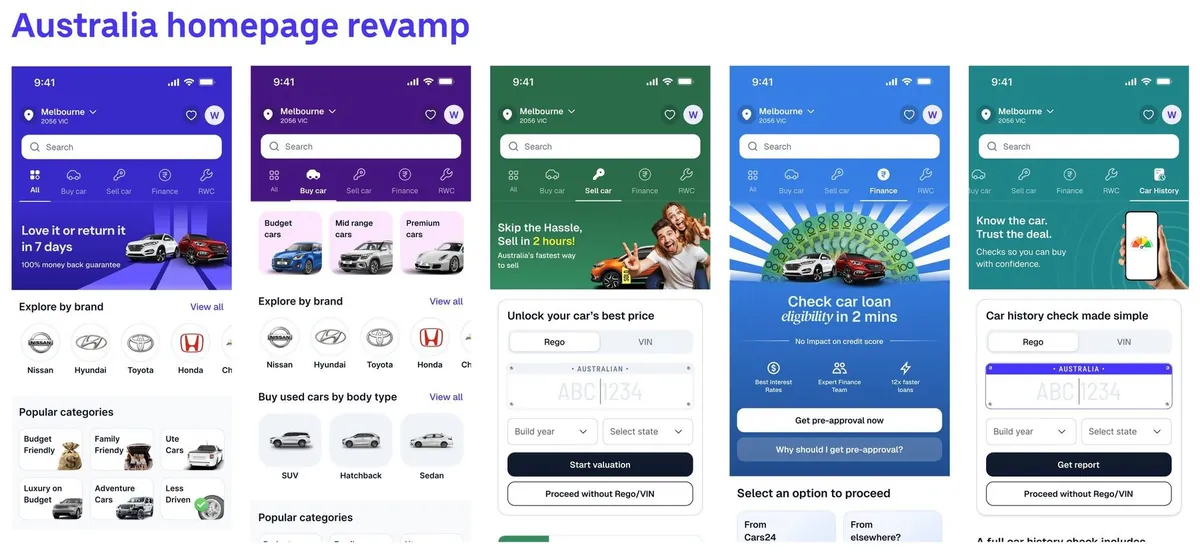
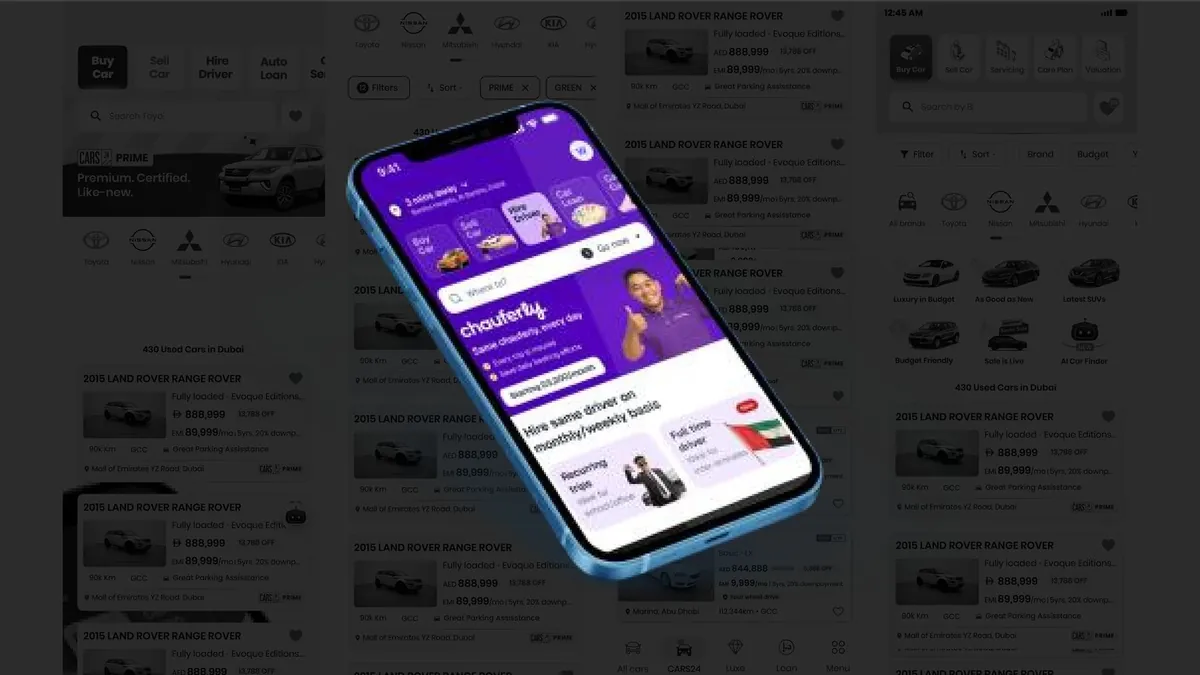
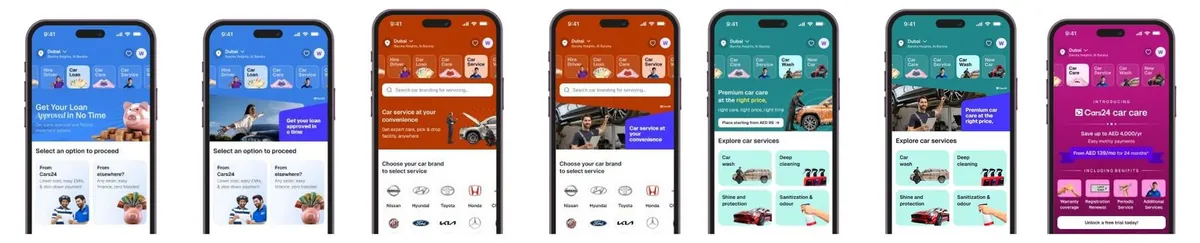
India's new homepage, the UAE app revamp, Australia's homepage in five themes, and new service apps for loans, servicing, car wash and car care.
What we'd do again
Small, token-driven blocks scale, and documentation decides adoption.
Small, token-driven blocks scale
They made fast experiments possible without new design debt.
Follow what users already know
Familiar patterns leave room to innovate where it matters.
Docs decide adoption
Clear guidelines kept people using it after launch.
Bring engineering in early
It caught performance limits before they became rework.
From the files
Select any image to see it full size.
Led by Aniket Pandey as Lead System Designer at CARS24, with two designers, two developers, a product manager and the CMS lead. Images belong to CARS24 and are shown for portfolio purposes.
Need this for your product?
We do this work for product teams now. Start with a two-week audit.